
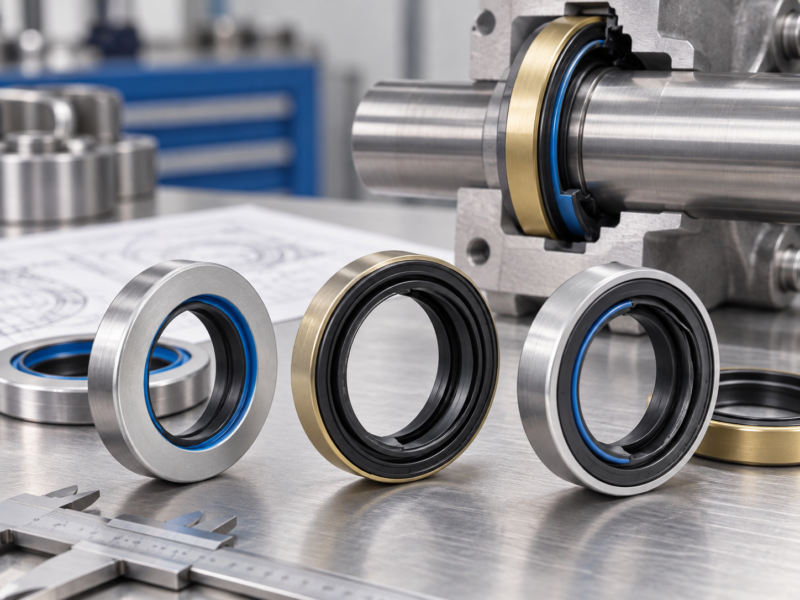
At first glance, a single-lip and a double-lip rotary shaft seal can look like straightforward alternatives. The real difference is not simply the number of lips: it is whether the application needs only to retain lubricant or also needs help keeping contamination away from the primary sealing line. That extra contact can be useful, but it also changes the demands on friction, heat and lubrication.
In a clean, enclosed assembly, one well-matched primary lip may be all that is needed. On equipment exposed to dust, splash or mud, an auxiliary lip may help protect the main sealing interface. Whether that added barrier is worthwhile depends on what reaches the shaft, how fast it turns and how the additional contact is lubricated.
Give every lip a defined function before choosing the profile.
The simplest arrangement that solves the actual problem is usually the best place to start. The primary lip must suit the retained medium; an auxiliary lip is worth considering when contamination can reach the sealing area. The full profile and operating conditions matter more than the lip count alone.
What the Seal Must Retain—and What It Must Keep Out
A rotary shaft seal sits between a rotating shaft and a stationary housing. The primary lip usually retains oil, grease or another medium, while the opposite side may face dust, water or debris. Those conditions are not interchangeable: fine airborne dust, occasional splash and packed mud place different demands on the seal.
Speed adds another layer. Every contacting lip slides against the shaft, and a second contacting lip introduces another source of friction and heat. That does not rule out double-lip designs at higher speeds; it means the added exclusion benefit has to be weighed against the lip geometry and lubrication conditions.
What stays inside
The primary lip is selected around the oil, grease or process medium it must retain.
What reaches the seal
Dust, water, road debris and mud vary in how they reach and wear the sealing area.
How the shaft runs
Speed, duty cycle, lubrication and shaft condition help determine whether a second contact is worthwhile.
A removed seal is useful evidence of the dimensions and arrangement that were installed, but it does not prove that the same arrangement still suits the machine. The operating environment may have changed, or the shaft’s running surface may have deteriorated.
With those conditions in mind, the rotary shaft oil seal range is a useful next place to compare profiles. A similar-looking seal is not necessarily a suitable replacement.
Single Lip, Double Lip and Dust Lip: What Actually Changes?
The names can be confusing because “double lip” and “dust lip” do not always describe separate designs. A double-lip seal often has a primary lip plus an auxiliary lip, and that second lip may be intended to keep dust away from the primary seal. The section drawing—not the label—shows how a particular profile is arranged.
When comparing profiles, check which lip performs the primary sealing, what the second lip is meant to do, which side each faces and whether both touch the shaft. The number of lips alone tells you very little about suitability for a particular application.
Single Lip Oil Seal
A single lip oil seal concentrates on the primary sealing interface. It is the simplest arrangement to evaluate when the main requirement is retaining lubricant and the external environment is already well controlled.
Its limitation is exposure. If dirt or abrasive particles can reach the seal directly, the primary lip has no additional contacting barrier ahead of it.
Double Lip Oil Seal
A double lip oil seal adds a second lip to the primary sealing function. That extra feature becomes useful when a second task is clearly defined, such as reducing the amount of external contamination that can approach the main sealing line.
The trade-off is contact. If both lips rub on the shaft, there are two interfaces to consider in the friction, lubrication and heat balance.
Dust Lip Seal
A dust lip seal uses the auxiliary feature for environmental exclusion. Its purpose is to reduce the amount of dust, particles or similar contamination reaching the primary sealing interface.
A dust lip is not automatically a complete solution for severe dirt, water or mud. The whole exclusion requirement still has to be reviewed.
Single lip vs double lip rotary shaft seal: the choice is not “basic versus premium.” It comes down to whether the application benefits from a second function. If there is no meaningful contamination problem to solve, the extra contact may add friction without adding useful protection.
Match the Lip Arrangement to the Real Contamination Environment
The environment often decides whether a second lip earns its place. A profile name does not establish a reliable protection level for dust, water, speed, temperature or pressure; what matters is the contaminant and how it reaches the sealing area.
Where lubricant retention is the main concern and the shaft area is already protected, a single-lip arrangement may be entirely adequate. Adding another contact in that situation can complicate the design without solving a real problem.
A housing shield, enclosure or nearby machine component may already be keeping contamination away, making an additional contacting lip unnecessary.
Airborne dust or occasional dirt can make an auxiliary lip worthwhile. A dust lip oil seal is most useful when contamination can realistically reach the primary sealing line—not simply because a two-lip profile fits the housing.
Its usefulness also depends on whether the auxiliary lip contacts the shaft and how the space between lips is lubricated. Those details matter more than the catalog label.
With abrasive debris, mud or repeated wet contamination, exclusion becomes a major part of the sealing problem. A dust lip may help, but the source of the contamination, its path to the shaft and whether it accumulates around the seal all affect what protection is needed.
Rotating automotive and mobile-equipment assemblies can combine lubricant retention with road or environmental contamination. CBD SEALS’ automotive sealing applications provide useful context for where rotary seals sit within the larger machine or vehicle system.
Names such as “double lip,” “dust lip” or “Combi” should not be treated as performance ratings. Any claim about contamination resistance, speed, temperature or pressure needs to be supported by the specific product data.
What Can Change the Outcome After You Choose a Lip Design?
Lip count is only one part of rotary shaft seal selection. Even a well-matched profile can disappoint if its orientation is wrong, the shaft running track is damaged or an auxiliary contact is poorly lubricated. These details often explain why two seals that look similar do not perform the same way in service.
Orientation matters
In a conventional retention arrangement, the primary lip usually faces the medium it retains, while a dust-exclusion lip faces the contamination side. Specialized profiles can differ, so the drawing for the specific seal should settle the orientation.
Showing the fluid side and environmental side on a drawing or RFQ removes ambiguity that the phrase “double lip” cannot resolve on its own.
Lubrication at both contacts
Every contacting lip slides against the shaft. When an auxiliary lip also makes contact, its lubrication and the condition of the space between the lips become part of the design—not an afterthought.
Poorly lubricated auxiliary contact can add friction, heat and wear at the same shaft location the primary seal depends on.
The shaft surface
Grooves, corrosion, scoring or deposits in the running track can compromise a seal regardless of lip count. If the new profile places a lip on a previously unused part of the shaft, that area deserves particular attention.
This is one reason a replacement with an extra lip can behave differently from the seal it replaces: the new contact may run on a part of the shaft that has not been used before.
Space and fit
Matching the shaft diameter and housing bore is only the starting point. Available width, clearance to nearby components and the internal geometry can still make two similarly sized seals non-interchangeable.
The installation path matters too: a suitable seal must pass over shaft features and enter the housing without folding or damaging its lip.
Speed changes the trade-off
A contacting lip creates friction as the shaft rotates. A second contacting lip adds another rubbing interface, which is why shaft speed, contact geometry and lubrication need to be considered together. Depending on the design and operating conditions, that extra contact can increase heat at the sealing area.
This does not create a universal rule that a double lip is unsuitable above a particular speed. No unverified speed threshold should be inferred from lip count alone. Check the limits of the actual proposed construction.
Many conventional rotary oil seals use a garter spring to support primary-lip contact, but its presence and geometry depend on the design. Single-, double- and dust-lip profiles should not be assumed to share the same spring arrangement.
Even a correctly selected seal can be damaged during assembly if the lip catches on a shaft edge or folds as it enters the housing. Clear orientation marks and an installation method suited to the profile help protect the sealing edge.
How to Narrow the Choice Without Guessing
Catalog shapes are useful once the application is understood, but they are a poor starting point on their own. The choice becomes clearer when the team can explain what the primary lip must retain, what the auxiliary lip is expected to exclude and how the added contact will run.
Start with the primary seal’s job
The retained medium and fluid side establish the main sealing requirement. Without that context, lip count is an incomplete specification.
Understand the exposure
A protected assembly may not need another contact. Dust, wet debris or mud can justify a dedicated exclusion function, depending on how contamination reaches the shaft.
Make the second lip earn its place
An auxiliary lip should address a real secondary need, such as keeping contamination away from the primary lip. If that role is unclear, the benefit of the extra contact is unclear too.
Balance protection with running conditions
Where the second lip contacts the shaft, its geometry and lubrication need to suit the shaft speed and duty cycle.
Check the physical interface
Shaft condition, housing dimensions, available width and the installation path can rule out a profile that looks right in a catalog.
Close the decision with product data
Material, lip geometry and operating limits should come from the specific seal’s drawing or specification, not from a similar-looking part.
A useful specification explains the choice: the primary lip retains the lubricant, the auxiliary lip addresses the contamination that reaches the shaft, and the added contact suits the speed, lubrication and available space. That gives a supplier a clearer brief than simply asking for the same double-lip seal.
What Information Should Be Included in an RFQ?
A quotation request is more useful when it describes the sealing problem as well as the physical size. This lets a supplier evaluate whether the lip arrangement matches the application instead of returning a dimensional look-alike.
- Shaft diameter and housing bore
- Available seal width or installation envelope
- Retained lubricant or process medium
- External contamination type and severity
- Shaft rotational speed and operating pattern
- Fluid side and contamination side
- Current lip arrangement, if known
- Whether the auxiliary lip is expected to contact the shaft
- Shaft counterface condition
- Relevant operating temperature conditions
- Relevant operating pressure conditions
- Drawing or section view when available
- Clear photographs of an unidentified replacement part
- Reason for review: leakage, contamination ingress, wear or redesign
Keep material and performance confirmation tied to the specific proposed product. A general statement that one elastomer or one lip style is “better” does not replace compatibility checks for the actual medium and operating conditions.
Common Lip-Design Selection Mistakes
The most common shortcut is to treat lip count as the specification. A removed part or catalog photo can help identify a likely replacement, but neither explains why the original profile was chosen or whether it still suits the application.
Problems usually arise from one of three assumptions: that two lips must be safer than one, that the removed seal is automatically the right replacement, or that every auxiliary lip performs the same dust-exclusion role. In practice, the right choice depends on the current environment, the actual lip geometry and the condition of the shaft where each lip will run.
Examples to Review After the Lip Function Is Defined
These two CBD SEALS products illustrate different approaches to rotary sealing when the application involves more than basic lubricant retention. They are starting points for comparison, not direct substitutes for one another; the required construction and operating limits still need to match the equipment.

The Combi Seal is worth reviewing when lubricant retention is only part of the job and the assembly also needs an additional barrier against external dirt. Its exact construction should still be checked against the machine’s contamination exposure and running conditions.
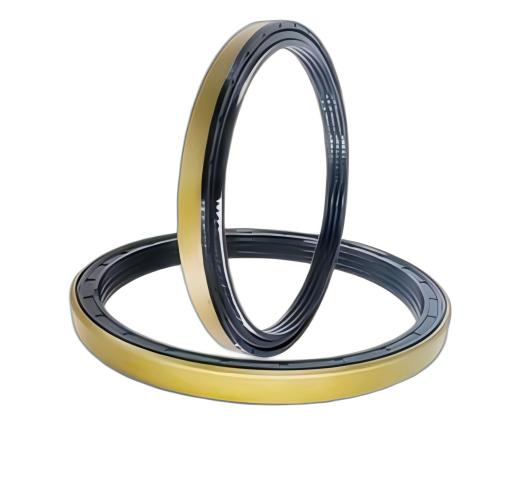
CBD SEALS lists this cassette oil seal for rotating applications including engines, transmissions and differential gears. A cassette seal represents a different sealing architecture, not a direct single-lip versus double-lip example. Consider it where the equipment calls for a cassette-style assembly, and verify the specific cross-section and operating limits before comparing it with a conventional radial shaft seal.
For a wider comparison, the CBD SEALS rotary shaft oil seal range includes several seal categories. It is a useful next step when the application details are clear, but one example product should not be treated as representative of every lip design.
Rotary Shaft Seal Lip Design FAQ
What is the difference between single-lip and double-lip shaft seals?
A single-lip seal uses one primary sealing lip for the main retention function. A double-lip design adds another lip for a defined secondary function, often contamination exclusion. Because terminology varies, confirm the section drawing and the job assigned to each lip.
When is a dust lip useful?
A dust lip is useful when external particles, dirt or similar contamination could migrate toward the primary sealing interface. Its suitability still depends on contamination severity, shaft contact, lubrication and the actual seal construction.
Does an extra lip increase friction?
If the additional lip contacts the rotating shaft, it creates another rubbing interface and can increase friction and heat generation. A non-contacting feature behaves differently, so check the actual geometry rather than judging friction from lip count alone.
Which way should a rotary shaft seal lip face?
In a conventional retention arrangement, the primary lip normally faces the medium being retained and a dust-exclusion lip faces the environmental side. The profile drawing for the specific seal should always be used as the final orientation reference.
What application details are needed to choose a lip design?
Provide the retained medium, external contamination, shaft and housing dimensions, available width, shaft speed, operating conditions, lip orientation, shaft counterface condition and the intended function of any auxiliary lip. A drawing or clear photographs are useful when replacing an unidentified seal.
Move From Lip Design to a Verifiable Seal Choice
The right rotary shaft seal lip design is the one that retains the required medium and handles the contamination the machine actually encounters, without adding contact the application does not need. With the operating conditions in hand, compare the relevant products or send the details to CBD SEALS for review.