
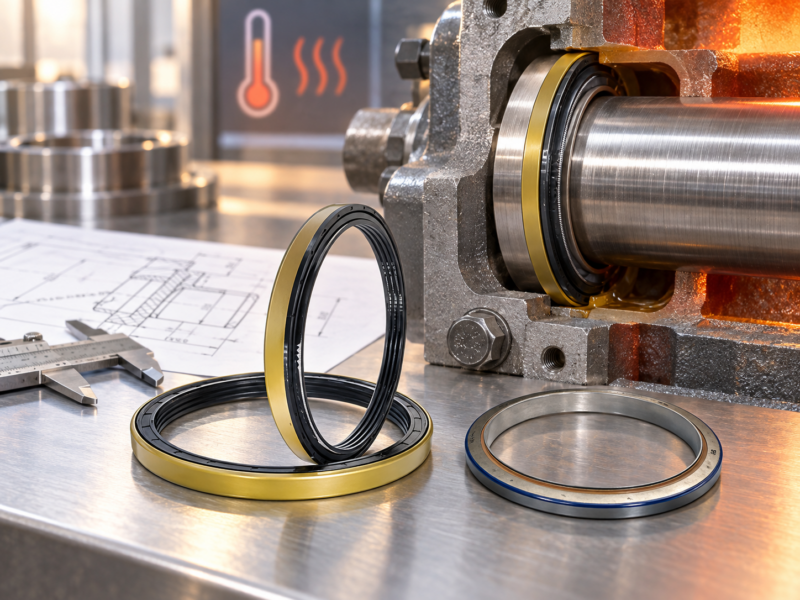
Oil seal temperature limits are not the same as oil temperature. A lip riding on a rotating shaft can run hotter than the sump because of friction, lubrication and contact load. Sustained heat can harden the material, reduce flexibility and shorten service life—even when the bulk oil temperature looks acceptable.
The useful starting point is to distinguish ambient, fluid and lip-contact temperatures. That difference often explains why a seal rated for the material family still wears or leaks prematurely.
Choose for the heat at the running lip, not just the temperature around the machine.
Consider the full duty: shaft speed, lubrication, contact force and how long the seal stays hot.
Ambient, bulk-fluid and lip interface temperature are three different conditions
An oil seal spans a rotating shaft, a housing and the fluid it retains. Those surfaces do not necessarily reach the same temperature, and the difference matters most at the sliding lip.
Air and nearby machine heat. An enclosure or engine can warm the seal housing beyond room temperature.
Oil temperature at the sump or measurement point—not at the sealing edge.
The lip-to-shaft contact, where friction adds heat and the oil and surrounding metal remove it.
One reading cannot represent all three zones. Friction may raise lip temperature above the surrounding oil.
A housing or sump sensor is valuable for trends, but it does not directly measure the moving contact band. When heat margin is tight, take readings near the seal and note the speed and load at the time.
Infrared readings on external surfaces are affected by emissivity and distance from the lip. Compare cold start, steady running and peak load instead of relying on a single snapshot.
For rotary applications, CBD SEALS groups oil seals under Industrial Automotive Seals. Fluid, speed and heat need to be considered together before selecting a part.
How heat changes the lip material and oil seal service life
Heat usually damages a sealing lip gradually. It can lose the flexibility needed to follow the shaft long before a dramatic failure is visible.
Exposure time matters as much as peak temperature. The same heat can produce different results in different compounds and fluids.
Why a lip hardens: it is often cumulative thermal aging, not a single event above a published limit. The compound and fluid determine how quickly it happens.
A short temperature peak and years of continuous heat are very different demands on the same material.
Shaft speed, lubrication, preload and heat dissipation change the real risk
A seal heats up when friction generates energy faster than the surrounding fluid, shaft and housing can remove it. Several ordinary design choices can shift that balance.
Use shaft surface speed, not rpm alone
At the same rpm, a larger shaft moves faster beneath the lip and may generate more frictional heat. Surface speed captures that difference.
Here, D is shaft diameter in meters, N is rpm and v is surface speed in m/s. A useful speed comparison needs both diameter and rpm.
Lubrication controls both friction and heat removal
A gearbox may have plenty of oil but too little at the sealing edge, particularly at startup or in a position with weak oil splash.
A hot lip with a low sump reading is a reason to examine the local oil path.
Preload and pressure change contact force
The lip needs enough contact to seal, but excessive interference, spring force or pressure adds friction and heat.
A harder-wearing compound cannot compensate for persistently excessive lip loading.
Heat dissipation depends on the complete assembly
Housing mass, shaft conduction, oil circulation and airflow govern heat removal. Similar machines can run at different seal temperatures.
Nearby engine or transmission heat may also warm the sealing area.
Thermal cycling is a different duty from steady heat
Start-stop duty combines cold lubricant, rapid warm-up and hot soak; it is not equivalent to steady running.
A single stabilized reading may miss the startup conditions that do the most damage.
Moderate bulk temperature can still produce high local risk
Even moderate sump temperatures can mask a hot running lip if speed is high or lubrication is weak.
A hot fluid reading does not explain the whole failure
A high oil temperature raises concern, but it does not explain failure without the seal’s duty and material data.
What a heat-damaged seal can—and cannot—tell you
A hardened lip suggests aging, not necessarily the reason it ran hot. Swelling may indicate fluid incompatibility; a shiny wear band can come from lubrication, shaft finish or excessive contact load.
The clues become useful when matched with operating conditions:
A higher-temperature compound will not fix an abnormal contact load or an oil-starved lip.
Choose an oil seal material for high temperature from the application, not the polymer name
NBR, HNBR, FKM, VMQ and PTFE-based seals do not share one universal rating. Even within a material family, the compound, fluid and seal design change what is sustainable.
For example, SKF’s radial shaft seal data lists upper lip-material limits of +100°C for its NBR (R) and +200°C for its FKM (V). Its continuous limits in mineral gear oil are lower: +80°C and +150°C. These are SKF-specific examples, not CBD SEALS product ratings.
When comparing high-temperature oil seals, a higher material rating will not resolve overheating caused by dry running or excessive contact force.
Ask for temperature and fluid-compatibility data for the specific lip compound and seal construction, not just the polymer family name.
CBD SEALS’ oil seal material options offer a starting point; the final choice still depends on the actual application.
What a seal supplier actually needs to know
“High temperature” tells a supplier very little. A few operating details are more useful than a long request for a material upgrade.
Temperature and medium data
- Ambient and normal/peak fluid temperatures.
- Peak exposure duration and housing temperature, if measured.
- Exact lubricant or process fluid, including additives.
- Nearby heat sources, where relevant.
Mechanical and duty data
- Shaft diameter and normal/maximum rpm.
- Duty cycle, including starts and stops.
- Lubrication, pressure and shaft condition.
- Failed-part symptoms and target service life.
For repeat failures, photos of the used lip and shaft track can be more useful than a description of the leakage alone.
For an RFQ: pair the temperature data with shaft speed, lubricant and duty cycle. That is what makes a compound review meaningful.
Separate heat damage from geometry and installation problems
Heat is not always the original fault. Shaft runout, surface damage and misalignment can overload the lip and create friction long before thermal aging would normally be expected.
If leakage starts immediately after installation or wear is one-sided, look at the shaft and installation first. These oil seal failure causes warrant a different investigation from long-term heat aging.
Put temperature higher on the list when…
Look for a temperature rise during running, gradual hardening or failures linked to speed and lubrication.
Put mechanical causes higher on the list when…
Immediate leakage, one-sided wear or shaft scoring points more strongly toward installation or geometry.
Where CBD SEALS products fit
These CBD SEALS parts illustrate two rotary sealing applications. Neither should be treated as a high-temperature recommendation until its material and operating limits have been confirmed.
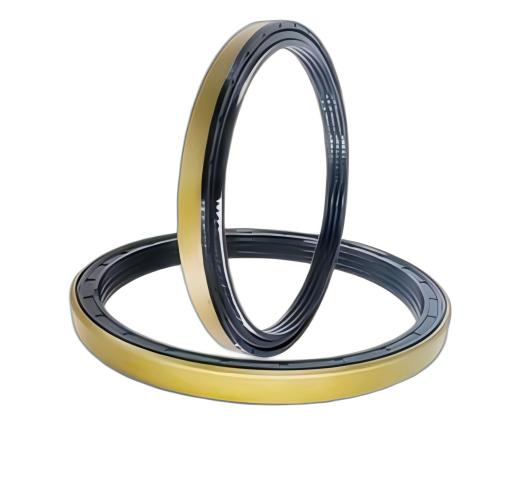
A cassette seal for a specified rotary application, where part fit, lubrication and contamination control all matter.

A part-number-specific crankshaft seal for listed Caterpillar applications, where machine heat and shaft condition also matter.
For other configurations, browse the CBD SEALS product shop by seal family or part number.
Oil seal temperature and service-life FAQ
Is oil temperature the same as seal lip temperature?
No. Oil temperature is measured in the fluid; friction can make the running lip hotter.
How does shaft speed raise oil seal temperature?
It raises sliding speed. Shaft diameter matters too: the same rpm produces greater surface speed on a larger shaft.
What does heat damage look like on an oil seal?
Hardening, cracking or glazing can be clues, but swelling may signal fluid incompatibility and wear may have mechanical causes.
Can lubrication reduce lip temperature?
Yes. Lubrication helps control friction and carry heat away, provided oil reaches the lip.
Should a hardened seal automatically be replaced with a higher-temperature material?
No. Check lubrication, shaft condition and contact loading before changing compounds.
What temperature information should be sent with an RFQ?
Provide normal and peak temperatures, fluid, shaft diameter, rpm, duty cycle, pressure and any failure evidence.
Need a seal that fits the operating conditions?
Share the temperature range, fluid, shaft size, speed and duty cycle when comparing parts or discussing a material choice.