
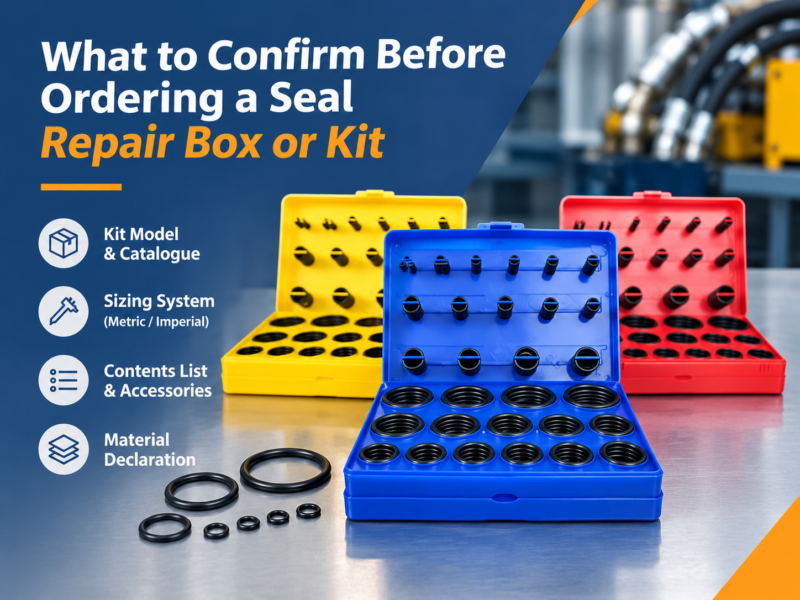
Before ordering a seal repair box or kit, think about the work it needs to support. Is it for replenishing commonly used O-rings, equipping a technician with seal-removal tools, or replacing the seals in a particular assembly? These are different purchases, even when they appear under the same catalogue category.
The useful comparison is between the contents of a named kit and the parts or tools the job actually calls for. A large assortment may be ideal for workshop stock, yet still lack a particular seal needed for a scheduled repair. Knowing that difference early makes it much easier to choose a model and request a meaningful quotation.
What kind of seal repair box does the job call for?
In a maintenance request, “seal repair box” can mean anything from a compartmented O-ring assortment to a collection of installation tools. The distinction matters: the buyer may be thinking of spare parts while the technician expects equipment for removing and fitting seals.
Useful for replenishing stock. Compare ring dimensions, compounds and the number of pieces in each size.
Intended for seal-removal or installation work. Compare the actual tools and accessories included.
Intended for a defined repair. Compare the seal profiles and part references with the assembly parts list.
For example, a storeroom request may simply be about topping up the O-ring sizes used every week. A work order for a hydraulic cylinder, however, could involve rod seals, piston seals and wipers as well. The same informal name can point to very different contents.
Once the purpose is clear, the search becomes simpler: size coverage for a stock assortment, tool contents for an installation box, or the required seal profiles for a planned repair.
Find the actual catalogue model
CBD SEALS lists seal repair boxes and kits under one product category, with references to metric, imperial, GB, JIS and excavator-related options. These terms help narrow the search, while the individual model listing gives the buyer and supplier a specific product to discuss.
A request written as “metric ring box” may make sense inside a workshop but still leave the supplier unsure which assortment is intended. Keeping the product name and page link with the inquiry gives everyone the same reference, especially if another configuration is proposed.
For instance, the category includes a listing for the Metric 386pcs Reparit O-ring Kits. That name identifies a particular product and its stated piece count, but the number alone says little about which ring sizes a maintenance team will find inside.
Look beyond the model name and piece count
The product title is a starting point, not a full description of what the box can do. For an O-ring assortment, the most useful information is usually the size breakdown, the quantity of each size and the material supplied. Those details tell you far more about its usefulness than the overall piece count.
A named model gives you a clear reference
CBD SEALS lists the Metric 386pcs Reparit O-ring Kits. Its published page identifies the model, but the visible product information does not itemise the O-ring sizes, quantities per size or elastomer compound. For buyers working from a maintenance list, those are the useful next details to obtain.
The product photo provides a visual reference for the assortment boxes. The size distribution, however, is something to establish from a contents list rather than the appearance of the compartments.
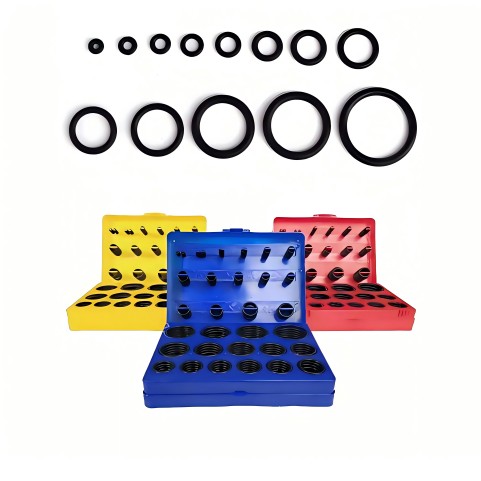
Metric 386pcs Reparit O-ring Kits
A named metric O-ring assortment for workshop stock enquiries. Its size breakdown and elastomer specification are the key details to compare with the rings your team uses.
Ring dimensions matter more than the word “metric”
O-rings are commonly specified by inside diameter (ID), the size of the opening, and cross-section (CS), the thickness of the ring. Two rings may have the same inside diameter but different cross-sections, so they should not automatically be treated as the same replacement. Labels such as metric, imperial, GB or JIS help identify a sizing system; the dimensions still have to match the application.
If a maintenance record gives a size code, compare its stated ID and CS with the ring dimensions in the proposed box. CBD SEALS also publishes a common metric O-ring size chart that can help interpret dimensional references. It is a sizing resource, not a contents list for this particular kit.
Why the total piece count is only part of the picture
“386pcs” describes the stated total number of pieces, not how many different sizes are represented. An assortment can hold several rings of the same size. If a workshop regularly uses only a few dimensions, having enough of those can be more valuable than a broad selection of sizes that rarely leave the storeroom.
A size-by-size contents list makes the comparison practical: the buyer can put it alongside past usage or an upcoming parts list and see whether the proposed assortment fills the gaps.
Materials and tools can change the choice
Even a complete size list does not always settle the question. O-rings with identical dimensions can be made from different elastomers, which may behave differently in hydraulic fluids, other chemicals and changing temperatures. A ring can fit the groove yet still be unsuitable for the service conditions.
For a specific repair, the equipment or seal specification should guide material selection. If the assortment listing does not identify its compound, sharing the intended fluid, operating conditions and any required elastomer with the supplier is more useful than guessing from the product name.
Tool boxes raise a similar question. A technician may already have standard picks but need a particular installation aid. In that situation, the useful comparison is between the required tool list and what the selected box actually includes—not the general phrase “repair kit.”
Choose differently for workshop stock and a planned repair
For general maintenance, repair and operations (MRO) stock, the aim is to keep frequently used rings ready for everyday work. Past consumption records are a better guide than the biggest assortment on the shelf. A box with hundreds of pieces can still run short of the few sizes the workshop uses most.
A scheduled repair starts somewhere else: the service parts list. A hydraulic cylinder, for example, may use rod seals, piston seals, wipers and O-rings in different locations. An O-ring assortment is useful for the O-rings it contains, but it is not a substitute for those other seal profiles unless the required parts are included in the chosen repair kit.
Similarly, an “excavator” label may point toward the right product family without identifying the seals fitted to a particular cylinder. The assembly or part reference, seal dimensions and application requirements help distinguish a workable repair kit from a general assortment.
When the contents align with the parts list, the buyer has a sound basis to proceed. If an important material or size is not yet documented, a specific question to the supplier may settle it. If the required parts are absent, a different kit or separately sourced seals will make more sense. The agreed contents can then travel with the purchase order, giving the receiving team a clear basis for checking delivery.
Turn the comparison into a useful inquiry
Once a likely model has been found, the enquiry can be short. Give CBD SEALS the product name and link, explain whether the box is for regular workshop stock or a particular repair, and include the dimensions or part references that matter.
For stock replenishment, the most useful questions are the available sizes and quantity of each. For a repair, it helps to attach the parts list and name any required material or installation tool. This gives the supplier a defined requirement rather than leaving it to interpret a machine name.
If another configuration is suggested, compare it against the same requirement. That way, a proposed alternative can be assessed on the parts it supplies, not simply on whether its name sounds similar.
For example: “Please quote the Metric 386pcs Reparit O-ring Kits for workshop spares. Could you share the included ring sizes, quantity per size and O-ring material? We will compare these with our maintenance stock list.” This gives the supplier enough context to answer without a long back-and-forth about which box is meant.
Frequently Asked Questions
Does an O-ring assortment include repair tools?
Some boxes are intended mainly for replacement rings, while others focus on tools. The contents list for the selected model is the best way to tell which accessories are included.
Does “386pcs” mean 386 different O-ring sizes?
No. It refers to the stated piece count, which can include multiple rings of the same size. A per-size contents schedule shows how the total is distributed.
What if the O-ring material is not listed?
Share the required compound or operating conditions with the supplier and ask which material the proposed kit contains. Size alone does not establish suitability for a particular fluid or temperature.
Can a general O-ring box cover a hydraulic cylinder repair?
It may supply some of the O-rings, but a cylinder can also require rod seals, piston seals and wipers. Compare the full service parts list with the kit contents before treating it as a complete repair solution.
Have a model in mind? Share its name or product link, the sizes or materials you need and how you plan to use the kit. If you are still comparing options, browse the CBD SEALS kit category first.