
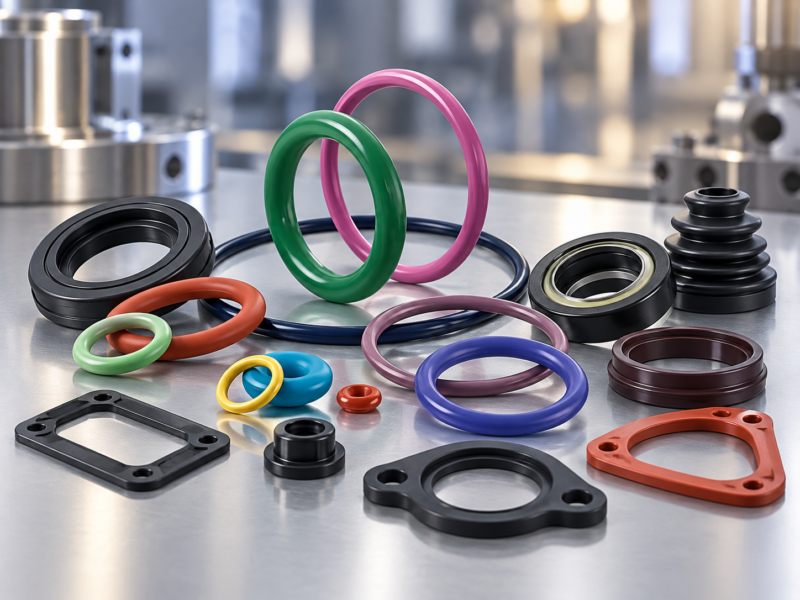
A useful rubber seal RFQ should give the supplier enough information to understand the application before material, dimensions or quotation scope are evaluated. The core custom rubber seals RFQ parameters are the application, operating medium, temperature range, pressure and duty, dimensions or drawing, material or performance requirements, sample and quantity requirements, and any quality-document expectations.
Procurement teams do not need to solve every engineering detail before asking for a quote. They do need to separate confirmed requirements from assumptions. Start with the operating conditions, then provide the drawing, physical sample or reliable dimensions. If the material is not confirmed, describe the performance boundary instead of choosing a rubber grade from previous experience alone.
A sample, drawing or material name can help, but none of them replaces the application conditions. A strong RFQ explains what the seal must do, what it contacts and which operating conditions actually affect the requirement.
First Decide Whether the Requirement Is Standard or Custom
Not every enquiry needs a long technical package. If the seal is already defined by a recognized size, known part number, approved drawing or existing purchasing specification, the sourcing task may mainly involve confirming the exact reference, material requirement and quantity.
A custom requirement is different. Non-standard geometry, a modified housing, an unidentified replacement sample or an application-specific design means the supplier needs to understand the operating context as well as the physical part. A request for “a rubber seal matching the existing sample” may contain useful information, but it does not explain what the seal has to survive.
Once the requirement clearly goes beyond a straightforward standard replacement, reviewing industrial rubber seals capabilities becomes useful because the supplier discussion is now tied to a defined application rather than a general search for seal products.
Parameters 1–4: Start With the Conditions the Seal Has to Handle
The first half of the RFQ answers the most useful question at the beginning of a custom enquiry: what job is this seal being asked to do? These four items usually deserve attention before buyers spend time debating a particular compound or narrowing every tolerance.
PARAMETER 01Application and sealing duty
Explain where the seal sits, what it separates and whether the interface stays stationary or moves. If movement is involved, describe the motion if known. Similar dimensions can face very different demands in a static joint, reciprocating mechanism or rotating assembly. An internal equipment code identifies the project, not the sealing duty.
PARAMETER 02Operating medium
State what actually contacts the seal. Include cleaning fluids, mixtures, additives or temporary exposure, plus concentration and exposure pattern when relevant. “Oil” or “chemical” is often too broad. If the medium is still being finalized, mark it as open instead of selecting a rubber grade simply to complete the RFQ.
PARAMETER 03Temperature range
Give minimum and maximum temperatures with units. Separate normal or continuous temperature from startup, cleaning and short process peaks. State how long any peak lasts and identify limits that are still preliminary.
PARAMETER 04Pressure and operating load
Describe normal and maximum pressure at the sealing point, including units. Add cycling, vacuum, short peaks or changing load when relevant, and note whether movement occurs at the same time. Mark preliminary values clearly rather than inserting an unsupported estimate.
If the application, medium or operating range is still unclear, clarify those items before spending time tightening dimensions or selecting a material. A precise drawing cannot compensate for an undefined operating environment.
Parameters 5–8: Then Define What the Supplier Is Actually Quoting
Once the sealing duty is understandable, the RFQ can move from application risk to the physical part, purchasing quantity and quality boundary. This is where drawings and specifications become much more useful.
PARAMETER 05Dimensions, drawing and tolerances
A current drawing communicates geometry, units, controlled dimensions and revision status. Without one, use a dimensioned sketch, installation measurements and a physical sample. Tighten the dimensions that affect fit or sealing function—not every feature by default.
PARAMETER 06Material, hardness and performance
State mandatory elastomer, hardness or internal material specifications clearly. For hardness, include the value and scale—for example, Shore A only when confirmed. If the information comes from an old part or purchase record, label it as observed rather than automatically fixed.
PARAMETER 07Sample status and quantity
Say whether a sample exists and whether it is unused or service-worn. A used seal may be compressed or swollen, so its present dimensions should not automatically become the new specification. Add prototype, initial order and recurring quantity where available.
PARAMETER 08Quality, inspection and documents
Include required inspection records, approval steps and documentation when they affect quotation scope. Replace vague requests for “full certification” with the checks and records the project actually needs, referencing the applicable specification when one exists.
Organize the RFQ around application risk first. If material cannot yet be confirmed, describe the required performance boundary and clearly leave material selection open for technical review. That is more useful than locking the enquiry to a compound selected simply because it worked in a different application.
What If You Only Have a Sample, Drawing or Application Description?
Custom seal sourcing often starts before the information package is complete. The right next step depends on what is already available.
Reconstruct the application
Add the operating context
Define the boundaries first
A Material Grade Is Not the Whole Rubber Seal Specification
“NBR required” or “use FKM” can be useful information, but the material name still needs to be read alongside the operating medium, temperature, pressure, motion and geometry. The same principle applies to hardness.
If hardness is part of an approved engineering specification, include it. If the value comes from measuring an existing component, distinguish that observation from a confirmed design requirement.
When no clear standard part exists, the only reference is a physical sample, or material and geometry still need review, compare the defined application with industrial rubber seal capabilities. Keep the commercial request for the final action step after the checklist and quote review.
Copy This RFQ Checklist Before Sending the Enquiry
Keep the request practical. Complete what is known, label preliminary values clearly and leave genuine technical questions open.
A Simple RFQ Email Can Be Enough
We are requesting a quotation for a custom rubber seal used in [application]. The seal contacts [medium / concentration, if relevant] and operates at [minimum / continuous / peak temperature + unit] and [normal / maximum pressure + unit]. The application is [static / dynamic + motion].
Drawing / sample information: [revision, units, dimensions and sample condition]
Material or hardness requirement: [mandatory / preferred / open for evaluation; include hardness value and scale if fixed]
Sample quantity: [quantity]
Initial order: [quantity]
Estimated recurring demand: [quantity]
Quality or documentation requirements: [details]
When the Quote Comes Back, Check More Than the Price
A quotation is useful only if it is based on the same assumptions purchasing and engineering intended to send. Before comparing suppliers, confirm the technical and commercial boundaries.
Part, drawing revision, material basis and approved deviations
Tooling or one-time charges, ownership and revision scope, if applicable
MOQ, quoted quantity, prototype versus production pricing and price breaks, if offered
What sample work is included and what must be approved before production
Whether lead time covers tooling, sampling, approval or production
Included checks, records and documents—and any separately quoted requirement
Keep unresolved technical questions visible until they have actually been closed. A preliminary assumption should not quietly become the approved rubber seal specification simply because a quotation has been issued.
Could another supplier understand the sealing duty, identify which requirements are fixed, see which items are still open and quote against the same purchasing scope without having to guess? If the answer is yes, the RFQ is probably ready for a meaningful supplier discussion.
Frequently Asked Questions
What information is needed for a custom rubber seal quote?
Do buyers need a technical drawing before requesting a custom seal?
How should operating temperature and media be stated?
Should hardness be specified in the first RFQ?
What quantity information helps a supplier quote accurately?
A Better RFQ Starts With the Application, Not a Material Guess
The most useful custom rubber seals RFQ parameters follow a practical sequence: define the application, medium, temperature and pressure first; then provide the drawing, sample or critical dimensions; identify which material or performance requirements are genuinely fixed; and finish with quantity and quality-document expectations.
If some details remain uncertain, keep them visible as open questions. That gives purchasing, engineering and the supplier a clearer basis for deciding what still needs to be confirmed before quotation scope and the final specification are accepted.
Prepare the available drawing or sample together with the operating medium, temperature range, pressure or duty, expected quantities and required quality documents. Clearly separate confirmed requirements from items that still need technical review.